A glimpse into a new social imaginary where economic growth is not in the main purpose of human life.
At the height of COVID-19, sometime between 2020 and 2021, it was hard to imagine life returning to “normal”. It was much easier to see and think about how much daily life we took for granted.
Everything changed suddenly and for quite a long time. Businesses closed, work was done from home, social time was through a screen, and a regular outing felt more like an expedition. Was it all bad? What were the consequences? It was a frightening and grievous time, but it allowed the world to step back and reevaluate anything and everything.
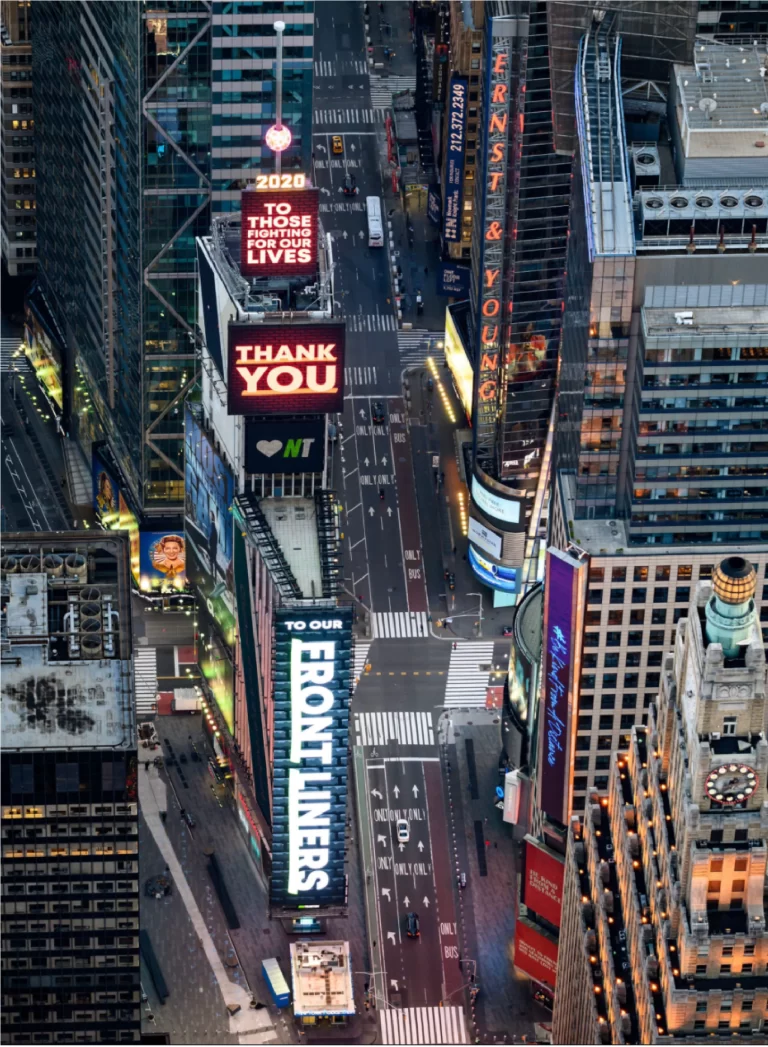
Times Square during the height of the COVID-19 lockdown.
According to the article Theoretical perspectives on organizations and organizing in the post-growth era, one of the silver linings of the pandemic, is that it allowed the world to question and reevaluate the indisputable need for societies to be driven almost exclusively by economic growth. In the article, the authors question the “assumptions that underlie traditional notions of growth - that economic growth can be endless and without limits, that resource extraction can proceed without regard for resource depletion or ecological damage, and that economic growth enhances the social well-being of all.” The authors allegate that economic growth is not a solution to societal problems like poverty and unemployment and call on the reader to question what is the definition of a “good life”.
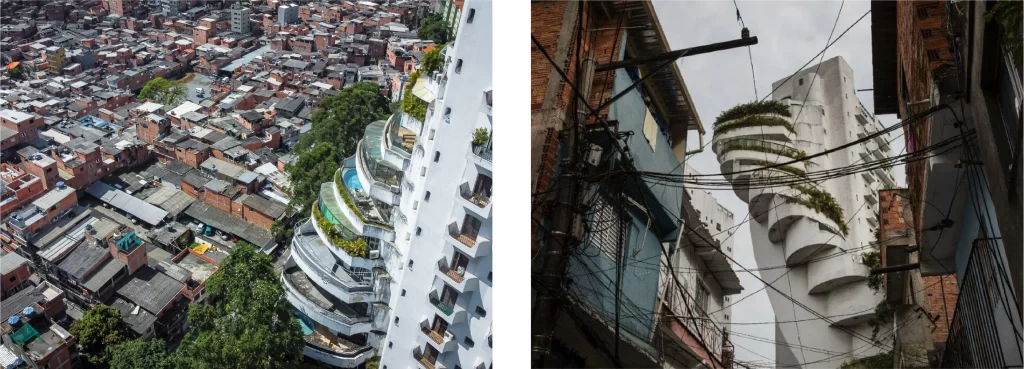
Aerial and street views of the contrasting realities in the city of São Paulo. Spatial inequality here is detected as physical symptom of social and economical inequalities.
The authors illustrate the obsolescence of the growth theory by citing another article published in the 1970s, which predicted if the business-as-usual scenario continues without intervention, society will risk a “sudden and uncontrollable decline in both population and industrial capacity” by 2050.
The most alarming fact is that progressive policies in sustainable and green agendas do not have measures to reduce consumption or production, and mainly maintain the growth narratives by proposing sustainable growth strategies and “green” alternatives to growth. Sadly, that will not be enough to avoid economic, social, and environmental collapse.
Teaser to an episode of Netflix's Life-Sized City documentary. This particular episode centers on the issues that surround population and economical degrowth in Japanese society and how it affects social and urban life.
Thus, the advocated solution to this pending crisis is to reimagine and refashion a new social imaginary and theorizing that adapts the general idea of a good life, decentering and reconceptualizing the “central place assigned to economic growth in our private and public lives and the importance of rising standards of material prosperity for all.” to transition into a Post-growth society.
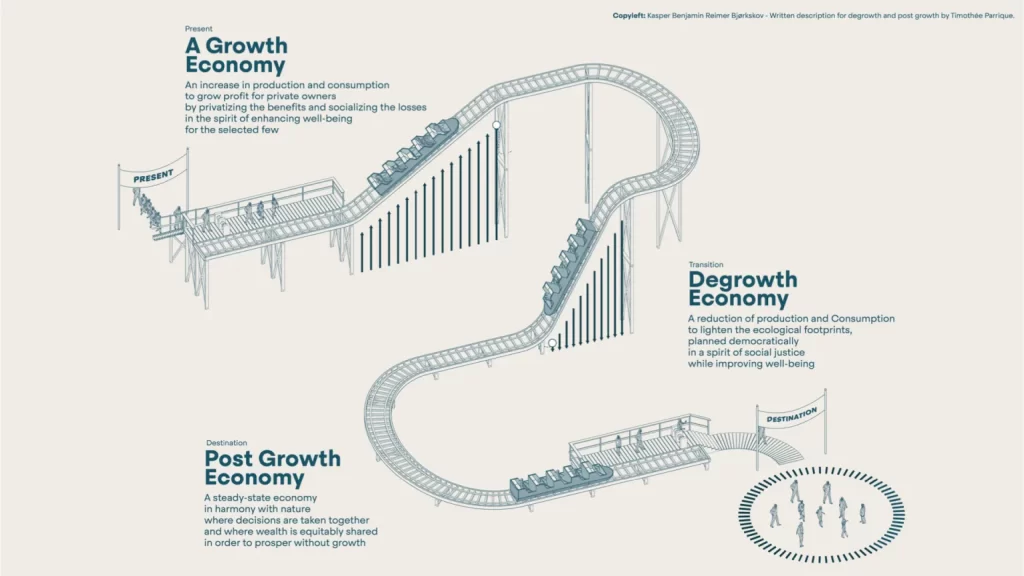
The transition from a growth-economy to a post-growth economy illustrated as if it was a rollercoaster ride.
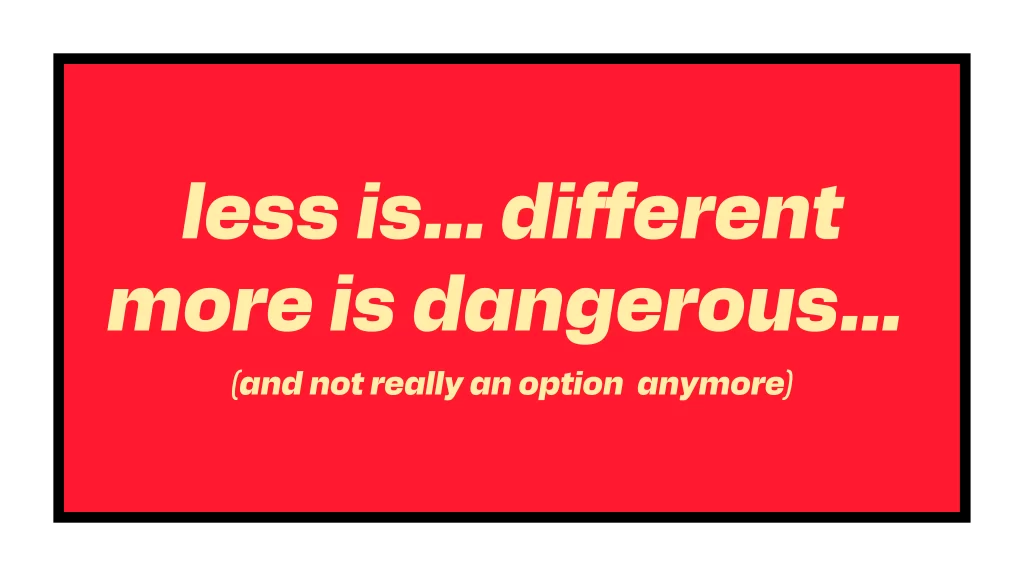
So what is a Post-growth society, and what does it look like? In essence, a post-growth society prioritizes human needs and well-being over limitless economic growth, focuses on sufficiency and services over consumption and production, and aims to deliver quality over quantity, which is not equal to less, just different.
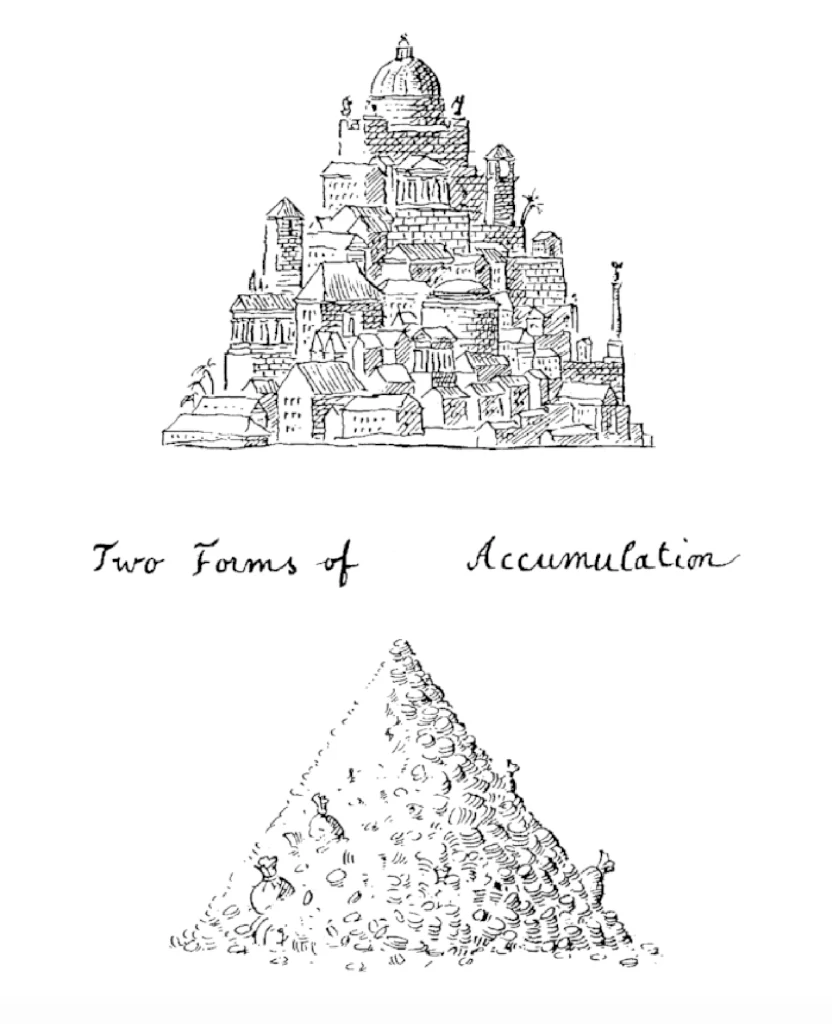
A Leon Krier sketch representing two different views of accumulation of urban 'capital'
The transition from a growth society to a post-growth society will demand, alongside the creation of a new social imaginary, a complete transformation and redesign of the global, national, and local economies.
The main goal is to shift from individualistic well-being and welfare to the notion of “being well together”, in society and economy that aims to promote and tie together community and individual subjective well-being and welfare" (Banerjee et al., 2020). The path to transition is not defined yet, but there are a few principles that are enough to use as basic guidelines to initiate the transformation and incite beneficial changes on multiple scales.
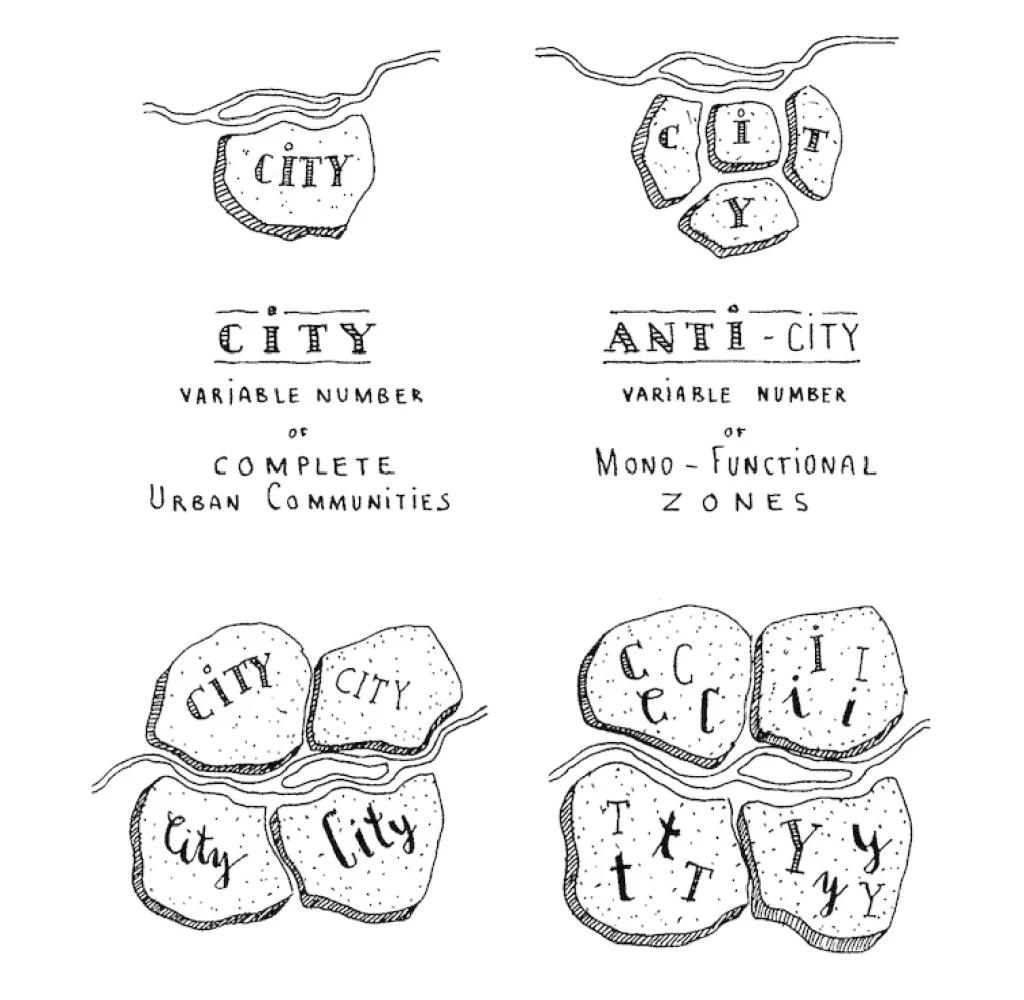
Anothet Leon Krier sketch, this one exemplifying the different ways to build communities and cities based solely on funtional zoning.
The path to transition is not defined yet, but there are a few principles that are enough to use as basic guidelines to initiate the transformation and incite beneficial changes on multiple scales.
The first principle, as discussed by the authors Banerjee, Jermier, Peredo, Perey, and Reichel, is focused on the re-distribution of wealth and the reduction of individualistic needs. The ultimate objective here is to reorient the status quo from an endless accumulation and consumption status quo to a more even distribution of wealth and a conscious reduction of consumption. According to the authors, this will command the population and politicians to “recover the sense that our collective well-being is not solely defined by GDP growth rates but in our capacity and willingness to share our wealth.” (Banerjee et al., 2020). In other words, economic growth needs to be replaced by economic distribution.
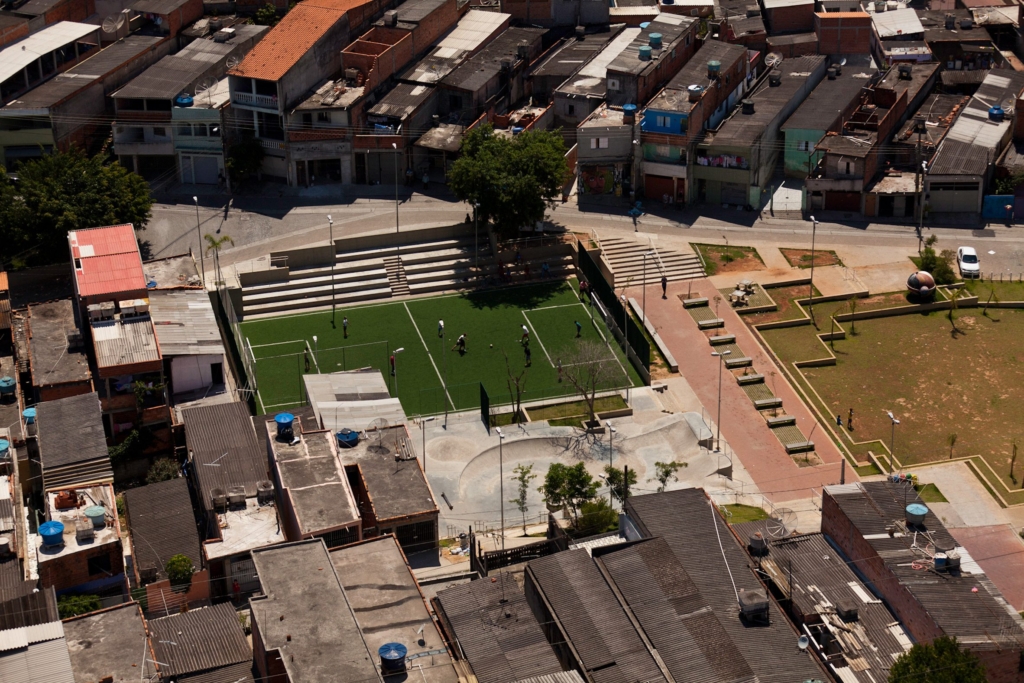
An aerial view of the urban intervention in the informal neighborhood called Cantinho do Céu, in São Paulo. The intervention consisted in providing infrastructural improvements while also to considering how to better integrate the complex into the urban systems.
The second principle calls for the dematerialization of the economy, shifting from a production and consumption life to a service and maintenance lifestyle to extract less and allow for the regeneration of the ecological systems and the planet. The main idea here is to reduce the production and consumption of goods that have a short-term lifetime and need vast end-of-life measures in favor of goods that are utilized for a very long time and can be maintained and adapted to last longer and diminish waste.
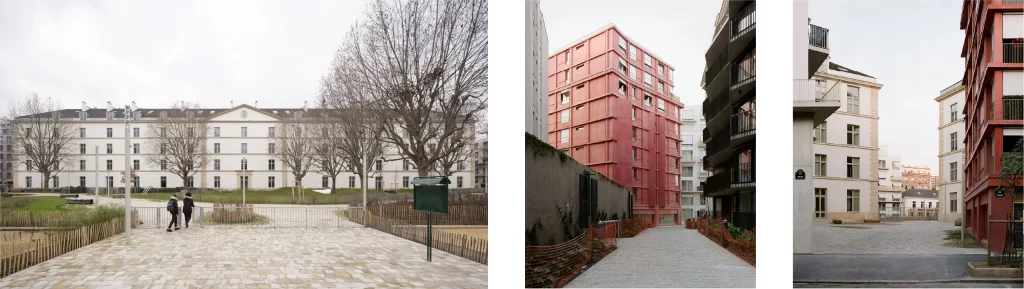
The Caserne de Reuilly in Paris was a social housing project that converted an abandoned military barracks in the city into more than 120 housing units. The intervention sought to reinsert the unused area back into the urban fabric while also taking advantage to densify the neighborhood by adding three new buildings to the city block.
The third principle advocates for instilling the notion and benefits of cooperation and community. As recent studies have shown, early human evolution depended on cooperation, sharing, and distribution of well-being in large communities to allow humans to accumulate, settle, and eventually develop other capacities and technologies, such as agriculture and trade systems. Nowadays, there is little cooperation, and the detrimental effects of widespread competition are socioeconomic inequalities and conflicts that have generated other symptoms like overconsumption and environmental destruction (Banerjee et al. 2020). To challenge and improve this scenario, individuals, businesses and, nations need to cooperate, and share technologies and resources, to reach better overall welfare and well-being.
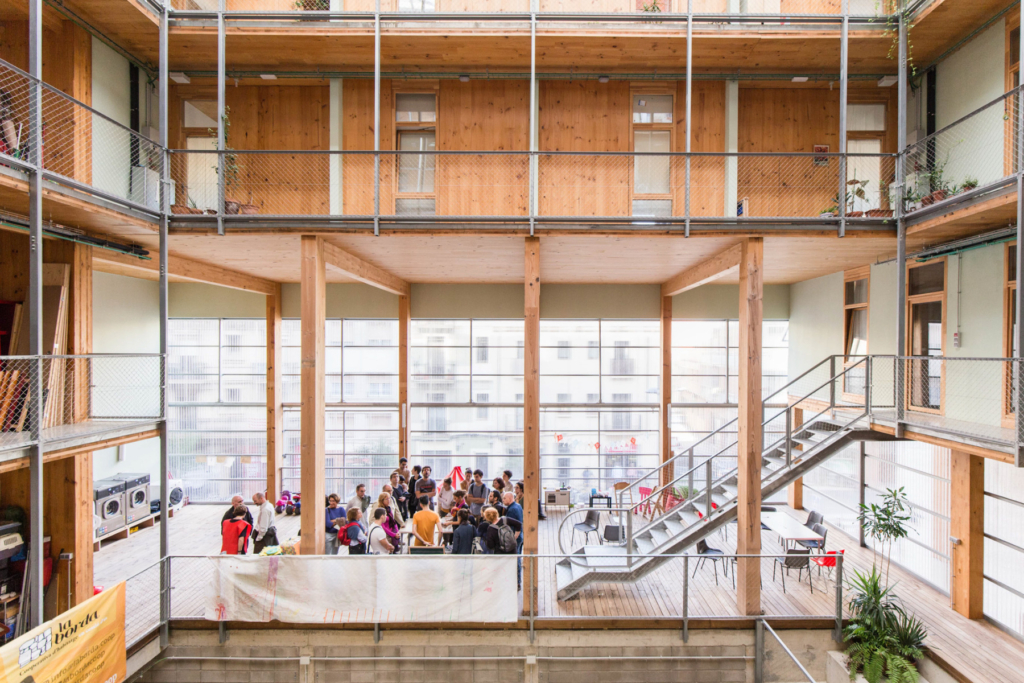
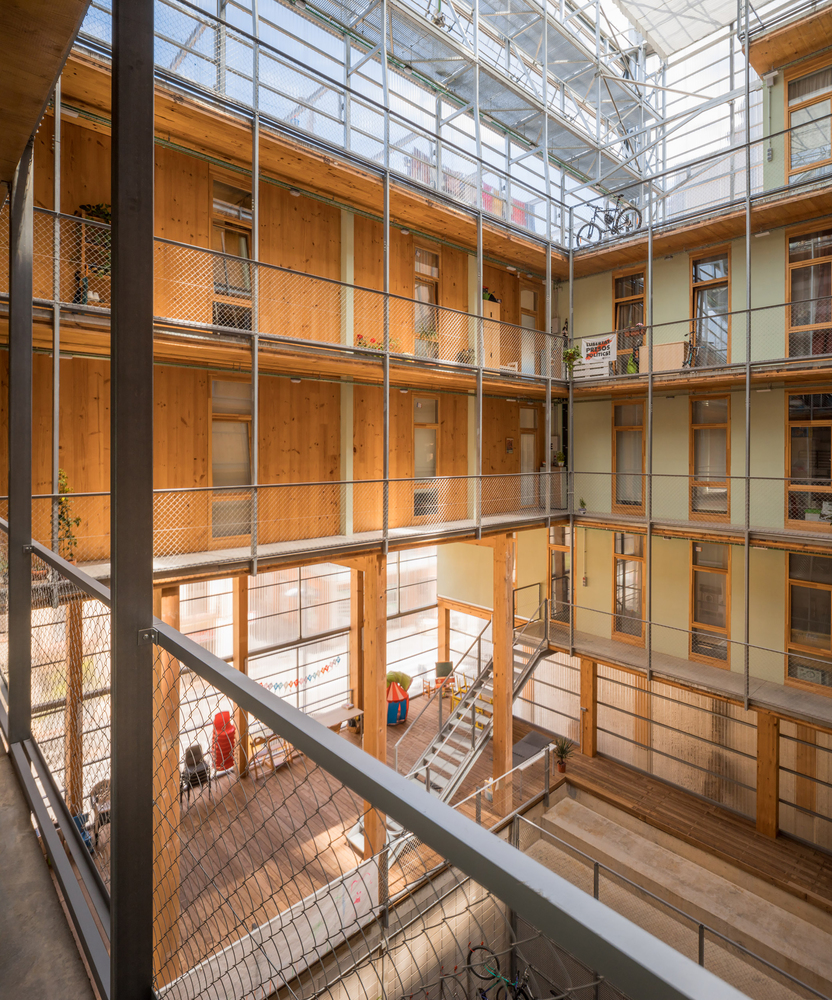
The La Borda building is the result of a community-driven project built on public land. The project was self-developed and organizes and non-speculative. More than just a cooperative in social terms, the residents of La Borda need to work together to control the bioclimatic utilities systems.
The fourth and last principle listed by the authors is the need to de-emphasize consumerism by incentivizing different conceptions and perceptions of wealth, welfare, and well-being. A key concept in achieving de-consumerism is the idea of collective sufficiency, which aims to set a new standard of well-being and welfare by equating abundance and success to the result of non-material life goals, and anchoring fulfillment in enriched social relationships (Banerjee et al. 2020).