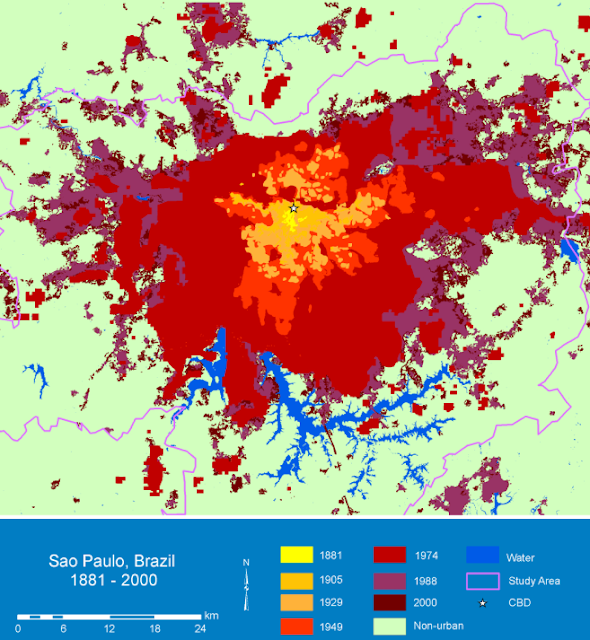
In the begging there was nothing, and now there is the Anthropocene.
The essay "(Un)Sustainability and Organization Studies: Towards a Radical Engagement," authored by Seray Ergene, Subhabrata Banerjee, and Andrew Hoffman, discusses the emergence of a new geological epoch, characterized by significant human influence over the ecosystem's functioning. This new era in planet history is known as the Anthropocene.

The illustration shows a hypothetical new geological age marked by human dominance over the natural environment. Source: https://www.npr.org/sections/13.7/2016/10/01/495437158/climate-change-and-the-astrobiology-of-the-anthropocene
The Anthropocene results from political and economic policies that prioritize wealth accumulation for a select few, often at the expense of the broader population and the environment. Among the pressing challenges faced by both humans and non-human entities during this period are climate change, species extinction, and ocean acidification.
While the problems and their potential consequences are evident, the solutions remain elusive. This is a central argument of the essay, as the authors urge researchers and scholars to envision pathways for sustainability and to realign the planet's trajectory towards a more sustainable future. Emphasizing that one of the most significant obstacles to achieving this goal is the pervasive influence of corporate interests in politics and economics.
In this essay, the authors explore the evolution of sustainability within management and organization studies, highlighting a concerning trend of diminishing political engagement. They propose a transformative research agenda that emphasizes an ecological perspective for business, advocating for four significant shifts:
- Epistemological Shift: Moving from managerial to critical perspectives to focus on ecological wellbeing and social justice rather than solely corporate interests.
- Ontological Shift: Transitioning from a realist view to a relational understanding, recognizing the interconnectedness of human and non-human entities.
- Interdisciplinary Collaboration: Encouraging collaboration between management studies and natural sciences to address the complexities of socio-ecological issues.
- Engaged Scholarship: Rejecting the notion of value-neutral research to embrace scholarship that actively seeks to foster social and environmental justice.
The authors argue that these shifts are essential for addressing the systemic crises of the Anthropocene and for redefining the role of organizations in fostering sustainable practices. They conclude by challenging scholars to reorient their inquiries toward the root causes of ecological and social challenges, advocating for a move away from a purely business-centered approach to one that prioritizes socio-ecological wellbeing.
In this essay, the authors explore the evolution of sustainability within management and organization studies, highlighting a concerning trend of diminishing political engagement. They propose a transformative research agenda that emphasizes an ecological perspective for business, advocating for four significant shifts:
- Epistemological Shift: Moving from managerial to critical perspectives to focus on ecological wellbeing and social justice rather than solely corporate interests.
- Ontological Shift: Transitioning from a realist view to a relational understanding, recognizing the interconnectedness of human and non-human entities.
- Interdisciplinary Collaboration: Encouraging collaboration between management studies and natural sciences to address the complexities of socio-ecological issues.
- Engaged Scholarship: Rejecting the notion of value-neutral research to embrace scholarship that actively seeks to foster social and environmental justice.
The authors argue that these shifts are essential for addressing the systemic crises of the Anthropocene and for redefining the role of organizations in fostering sustainable practices. They conclude by challenging scholars to reorient their inquiries toward the root causes of ecological and social challenges, advocating for a move away from a purely business-centered approach to one that prioritizes socio-ecological wellbeing.
That being said, how can architecture contribute for a post-growth society?
We are living in a time of profound contradiction. Never before has the global economy been so productive, interconnected, and technologically advanced — and yet, the world faces mounting social and ecological crises. Climate change accelerates, biodiversity collapses, social inequality deepens, and general health deteriorates across populations. Despite record-breaking GDPs in many countries, quality of life remains deeply uneven, and the very systems meant to ensure prosperity now seem to threaten long-term sustainability.
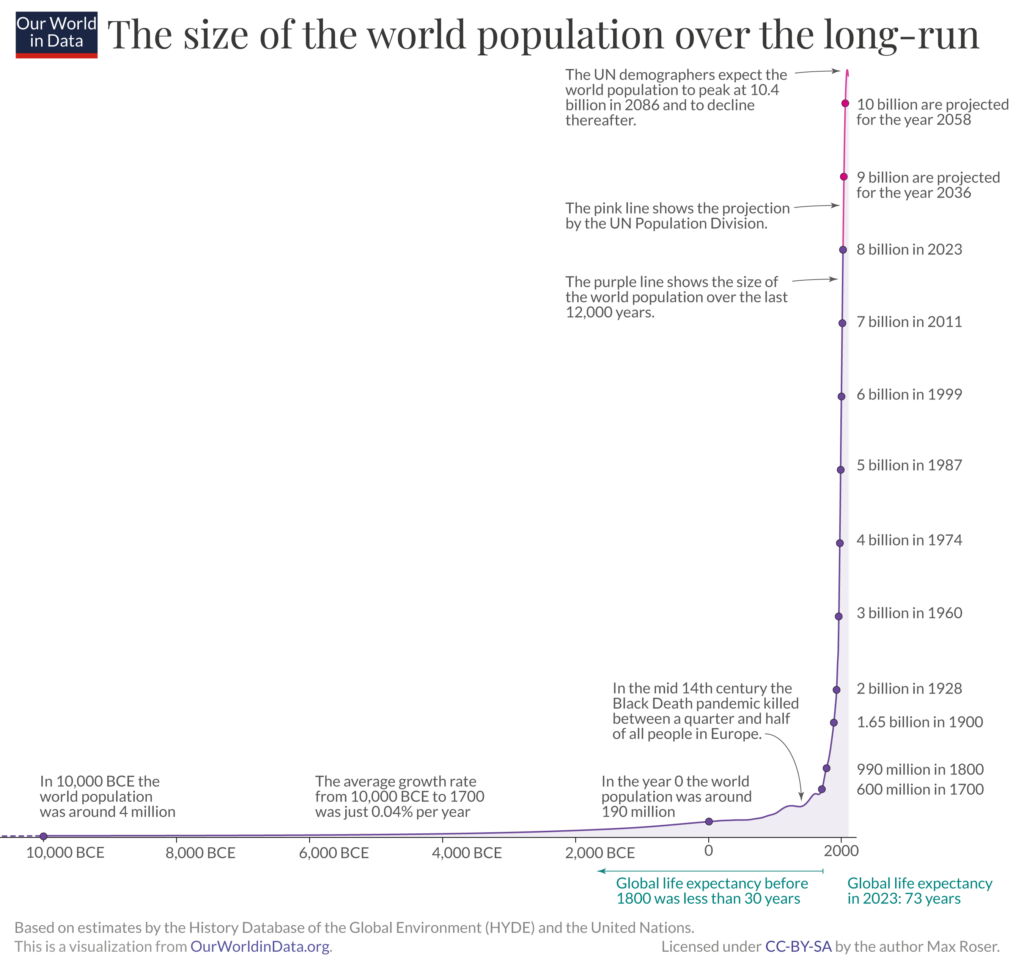
The graph illustrates world population growth since 10.000 BCE. Source: https://ourworldindata.org/population-growth-over-time
At the heart of this contradiction lies a critical question: What if economic growth — long treated as the ultimate indicator of progress — is no longer fit for purpose? While GDP continues to dominate political agendas and public discourse, it fails to capture the full picture of human and planetary well-being. Social cohesion, ecological balance, cultural richness, and collective welfare are often treated as secondary — if not invisible — in economic policy and planning.
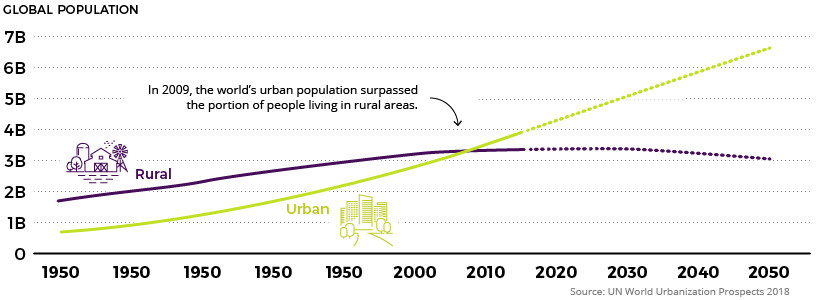
The graph illustrates the process of urbanization.
Source:https://www.weforum.org/stories/2019/09/mapped-the-dramatic-global-rise-of-urbanization-1950-2020/
This imbalance did not emerge overnight. It is the product of an economic model that has evolved over centuries, but that has taken over the world since the end of World War II. The 1940s marked a turning point, as nations rebuilt their economies and embraced industrial expansion. The Bretton Woods institutions established the framework for a global economy driven by productivity and trade. In the following decades, the so-called "golden age" of capitalism brought unprecedented material prosperity — especially in the West — but also laid the foundations for overconsumption and environmental exploitation.